World War I · Film · 2005
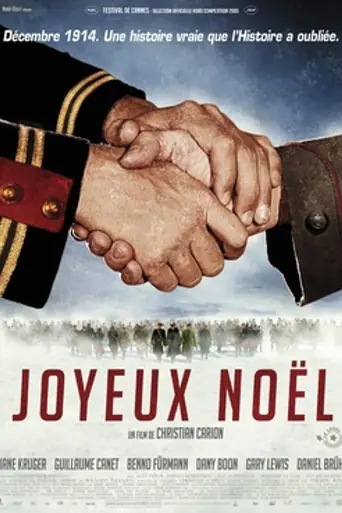
Joyeux Noël
On Christmas Eve 1914, a German tenor sings in the trenches, Scottish bagpipes answer, and French, Scottish and German soldiers climb out to share a night of peace their generals never approved.
Where it happened
Follow the story across 3 places.
Stop 1: Berlin opera
Sprink's performance with Anna is interrupted by an officer announcing the call-up of reservists.
Stop 2: Crown Prince's headquarters
Anna wins permission to sing for Crown Prince Wilhelm, and Sprink, disgusted by the generals' comfort, decides to sing for the troops instead.
Stop 3: Christmas truce front, French Flanders
Key location
Carols, bagpipes and a small Christmas tree bring three enemy lieutenants into no man's land to agree a ceasefire for the night.
What really happened
The Christmas truce of 1914 was real: along much of the British sector, and in places facing French and Belgian troops, soldiers stopped fighting on 24 and 25 December, sang carols, exchanged food and souvenirs, buried their dead and in some places played football. Near Frelinghien, men of the Royal Welch Fusiliers came out to meet Saxon troops.
Carion built one fictional sector from several documented episodes. The tenor Nikolaus Sprink is based on Walter Kirchhoff of the Berlin court opera, who sang for Württemberg regiments at the front and drew applause from the opposite trenches. High commands on both sides condemned the fraternisation, and no truce on that scale happened again.
Where to watch
Checking streaming services…
Full details
- Original title
- Joyeux Noël
- Directed by
- Christian Carion
- Countries
- France, Germany, United Kingdom, Belgium, Romania, Japan
- Languages
- French, English, German
- Released
- 2005
- Period
- –
- Theaters of war
- Western Europe
- Themes
- Combat
- True story