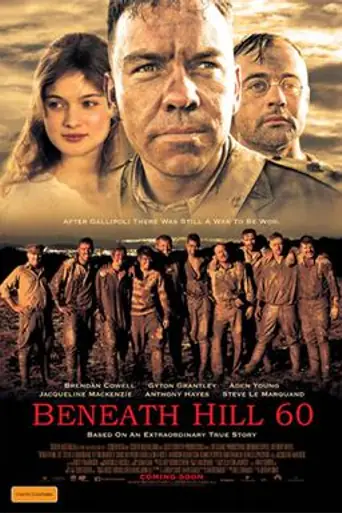
Beneath Hill 60
Here in the story
Battle
Guarding two enormous mines beneath the German-held hill, the tunnellers must keep them hidden and dry until the day they are needed.
The Belgian town of Ypres sat in a salient held by British and Commonwealth troops for most of the First World War. The Germans used poison gas on a large scale here in April 1915. On 7 June 1917 nineteen huge mines, including one tunnelled under Hill 60 by Australian miners, opened the Battle of Messines, and the Third Battle of Ypres, Passchendaele, followed from July to November in deep mud.
Here in the story
Battle
Guarding two enormous mines beneath the German-held hill, the tunnellers must keep them hidden and dry until the day they are needed.
Here in the story
Battle
Joey and the black stallion Topthorn charge a German camp with Captain Nicholls, straight into hidden machine guns.
Here in the story
Front line
Soldiers describe the routine of the line: rats, lice, trench foot, tea brewed under fire and the constant presence of the dead.
Technology
At Ypres the German army released chlorine gas on a large scale for the first time, opening a gap in the Allied line. Chemical weapons soon spread to every army and became a lasting symbol of the war's horror.
Read more on Wikipedia(opens in a new tab)Battle
British and Commonwealth forces attacked east of Ypres toward the village of Passchendaele. Heavy rain turned the shell-torn ground into a sea of mud, and the small gains came at a terrible human cost.
Read more on Wikipedia(opens in a new tab)Naval
Trapped against the coast, more than 338,000 British and French soldiers were rescued by warships and hundreds of civilian 'little ships'. The army lost its equipment, but saving its men let Britain keep fighting.
Read more on Wikipedia(opens in a new tab)