Interwar · Film · 1981
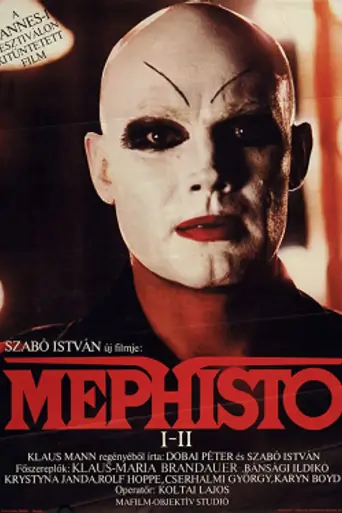
Mephisto
A brilliant, vain actor who once dreamed of revolutionary theatre stays in Nazi Germany to become its greatest star, and discovers what the regime expects in return.
Where it happened
Follow the story across 2 places.
Stop 1: Hamburg
In a provincial Hamburg theatre, Hendrik Höfgen burns with ambition, plays the rebel and even launches a revolutionary workers' stage.
Stop 2: Prussian State Theatre, Berlin
Key location
With the Nazis in power, Höfgen returns from abroad, triumphs as Mephisto and accepts the patronage of a powerful general.
What really happened
The film adapts Klaus Mann's 1936 novel, a thinly veiled portrait of his former brother-in-law Gustaf Gründgens. Gründgens rose from the Hamburger Kammerspiele in the 1920s to become Germany's most celebrated Mephisto, and under the protection of Hermann Göring, who controlled the Prussian State Theatre, he was made its director in 1934 while many colleagues fled into exile.
Gründgens's adopted son sued to stop the novel's publication in West Germany, and the Federal Constitutional Court upheld the ban in 1971. Szabó's Hungarian co-production, with Klaus Maria Brandauer as Höfgen, became the first Hungarian film to win the Academy Award for Best Foreign Language Film. Like the novel, it fictionalises names and events; Gründgens also used his position to shield some endangered colleagues.
Where to watch
Checking streaming services…
Full details
- Original title
- Mephisto
- Directed by
- István Szabó
- Countries
- Hungary, Germany, Austria
- Languages
- German
- Released
- 1981
- Period
- –
- Theaters of war
- Western Europe
- Themes
- Politics