World War II · Film · 2006
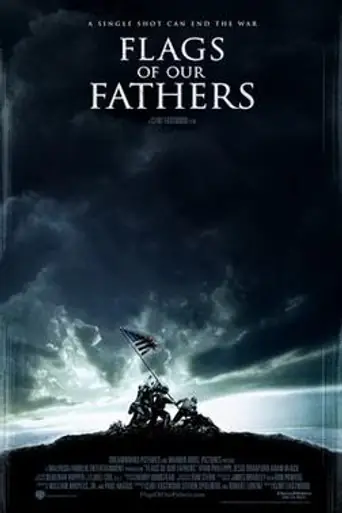
Flags of Our Fathers
Three of the men in the most famous photograph of the war are pulled out of the fighting on Iwo Jima and sent home to sell war bonds as heroes, a role none of them can live with.
Where it happened
Follow the story across 5 places.
Stop 1: Camp Tarawa, Hawaii
The young men of the 28th Marines train on the slopes of the Big Island before shipping out for an island none of them has heard of.
Stop 2: Iwo Jima landing beaches
After three days of naval bombardment the Marines come ashore on black volcanic sand, and the hidden defenders open fire.
Stop 3: Mount Suribachi
Key location
A replacement flag goes up on the summit, a photographer clicks his shutter, and the men carry on fighting without knowing what the picture will become.
Stop 4: Washington, D.C.
The three survivors are received as heroes and told that the war effort depends on them keeping the story simple.
Stop 5: Soldier Field, Chicago
In a packed stadium the men climb a papier-mâché Suribachi to re-enact the flag raising, and Ira Hayes starts to fall apart.
What really happened
On 23 February 1945, four days into the invasion of Iwo Jima, Marines raised a small flag on Mount Suribachi; hours later a second, larger flag replaced it, and Associated Press photographer Joe Rosenthal captured the moment. The image ran in newspapers within days and won the Pulitzer Prize, while three of the six men in it died in the fighting that continued until late March.
The survivors were brought home for the Seventh War Loan drive of May to July 1945, which raised more than 26 billion dollars. The film follows James Bradley's 2000 book about his father, John Bradley; Marine Corps investigations in 2016 and 2019 later concluded that Bradley and Rene Gagnon were not in the famous photograph, but Harold Schultz and Harold Keller were.
Where to watch
Checking streaming services…
Full details
- Original title
- Flags of Our Fathers
- Directed by
- Clint Eastwood
- Countries
- United States
- Languages
- English
- Released
- 2006
- Period
- –
- Theaters of war
- Pacific, The Americas
- Themes
- Combat
- Home front
- True story