Must-watchInterwar · Film · 1987
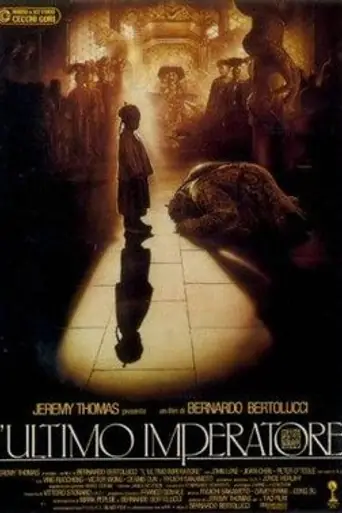
The Last Emperor
Crowned emperor of China at two, Puyi lives as a prisoner of the Forbidden City, a pawn of Japan in Manchuria and finally an inmate of the Communist state.
Where it happened
Follow the story across 4 places.
Stop 1: Forbidden City, Peking
Key location
Crowned as a toddler, Puyi grows up among eunuchs and rituals, forbidden to leave the palace long after China becomes a republic.
Stop 2: Zhang Garden, Tientsin
Expelled from the palace, the former emperor lives as a westernised playboy in the foreign concession, courted by the Japanese.
Stop 3: Imperial Palace, Hsinking (Changchun)
Enthroned as emperor of Manchukuo, Puyi discovers that the Japanese control every decision, while his wife sinks into opium addiction.
Stop 4: Fushun war criminals centre
Handed over to the new People's Republic, the former emperor must learn to tie his own shoes and confront his past.
What really happened
Puyi became the last Qing emperor in 1908 and abdicated in February 1912 after the revolution that created the Republic of China, but he was allowed to live inside the Forbidden City until a warlord expelled him in 1924. He then lived in the Japanese concession of Tientsin, and after Japan seized Manchuria in 1931 he became head of its puppet state of Manchukuo, enthroned as emperor in 1934.
Captured by the Soviets in 1945 and handed to the People's Republic in 1950, he spent nearly ten years in the Fushun war criminals centre before being pardoned in 1959. Bertolucci's film was the first Western feature allowed to shoot inside the Forbidden City. It relies heavily on Puyi's autobiography, written under Communist supervision, and dramatises episodes such as the fate of Empress Wanrong's baby.
Where to watch
Checking streaming services…
Full details
- Original title
- The Last Emperor
- Directed by
- Bernardo Bertolucci
- Countries
- Italy, United Kingdom, China
- Languages
- English, Chinese, Japanese
- Released
- 1987
- Period
- –
- Theaters of war
- China & Southeast Asia
- Themes
- Biography
- True story
- Politics
- Prisoners of war