World War II · Film · 2005
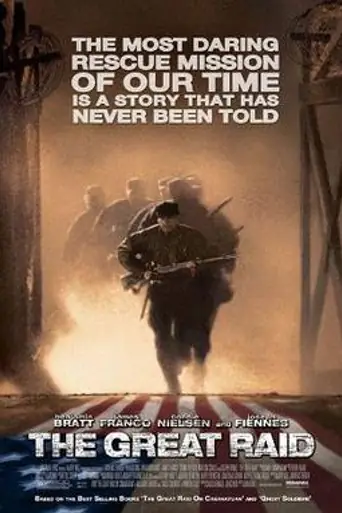
The Great Raid
As American forces return to Luzon, a battalion of Army Rangers and Filipino guerrillas race behind Japanese lines to free the survivors of the Bataan Death March before their guards kill them.
Where it happened
Follow the story across 4 places.
Stop 1: Puerto Princesa, Palawan
The film opens with the massacre of American prisoners on Palawan, the fate the Rangers must prevent at Cabanatuan.
Stop 2: Lingayen Gulf, Luzon
At the new American beachhead, General Krueger orders Mucci to rescue the prisoners, and Captain Prince draws up the plan.
Stop 3: Fort Santiago, Manila
In occupied Manila, nurse Margaret Utinsky smuggles medicine to the camp until the Kempeitai arrests and tortures her.
Stop 4: Cabanatuan POW camp
Key location
After a daring approach across open fields, the Rangers storm the camp at dusk while the guerrillas block the bridge.
What really happened
On 14 December 1944 Japanese guards at Puerto Princesa on Palawan forced about 150 American prisoners into air-raid trenches and burned them alive; only 11 escaped. The massacre convinced American commanders that the prisoners at Cabanatuan, many of them survivors of Bataan and Corregidor, were in danger as US troops advanced after landing at Lingayen Gulf in January 1945.
On the night of 30 January 1945, more than 120 Rangers of the 6th Ranger Battalion under Lieutenant Colonel Henry Mucci and Captain Robert Prince, with Alamo Scouts and some 250 Filipino guerrillas led by Captain Juan Pajota, freed 489 prisoners and 33 civilians while the guerrillas held off Japanese reinforcements at the Cabu River. The film is faithful to the raid; Major Gibson and his romance with the real nurse Margaret Utinsky are invented.
Where to watch
Checking streaming services…
Full details
- Original title
- The Great Raid
- Directed by
- John Dahl
- Countries
- United States, Australia, Philippines
- Languages
- English, Japanese, Filipino
- Released
- 2005
- Period
- –
- Theaters of war
- Pacific
- Themes
- Combat
- Prisoners of war
- True story