Interwar · Film · 1996
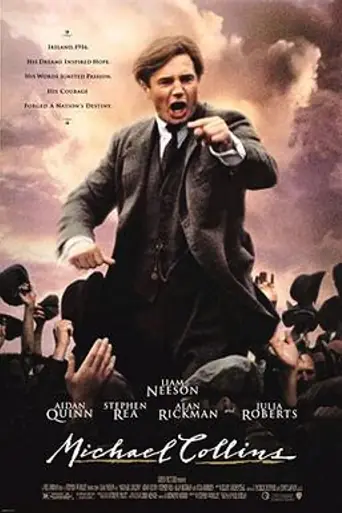
Michael Collins
Michael Collins turns a defeated rebellion into a guerrilla war that forces the British Empire to negotiate, then must sell the compromise to his own comrades.
Where it happened
Follow the story across 5 places.
Stop 1: General Post Office, Dublin
Key location
The film opens with the rebels surrendering their shattered headquarters on Sackville Street and a young Collins vowing never to fight that way again.
Stop 2: Croke Park, Dublin
Collins's squad strikes at British intelligence officers across Dublin, and the reprisal falls on a crowd watching Gaelic football.
Stop 3: Custom House, Dublin
De Valera orders a conventional assault on a great public building, and the Dublin IRA pays a heavy price.
Stop 4: 10 Downing Street, London
Collins is sent to London to negotiate with Lloyd George and Churchill, knowing any deal will split the movement.
Stop 5: Béal na Bláth, West Cork
With civil war raging, Collins drives through his native West Cork hoping to meet the other side and end the fighting.
What really happened
Collins fought in the 1916 Easter Rising and, after internment, became the IRA's director of intelligence and the Republic's finance minister. His Dublin 'Squad' dismantled British intelligence in the city, climaxing on Bloody Sunday, 21 November 1920. He led the negotiations that produced the Anglo-Irish Treaty of 6 December 1921, then commanded the Free State army in the civil war until he was killed in an ambush in August 1922.
Neil Jordan takes notable liberties. At Croke Park no armoured car drove onto the pitch, although Crown forces did kill 14 people there; Ned Broy was never killed and later became Garda commissioner; and the film casts Éamon de Valera in a harsher light than historians support, even hinting at his complicity in Collins's death.
Where to watch
Checking streaming services…
Full details
- Original title
- Michael Collins
- Directed by
- Neil Jordan
- Countries
- Ireland, United Kingdom, United States
- Languages
- English
- Released
- 1996
- Period
- –
- Theaters of war
- Western Europe
- Themes
- Biography
- Politics
- Civil war
- True story